

What the services are designed for
Wise supports holding, converting and sending multiple currencies. A sender can enter the source or target amount, see the provider’s stated mid-market rate and a separate fee, then fund the transfer by bank, eligible card or another local method. The usual payout is a bank account, although local options can appear depending on country.
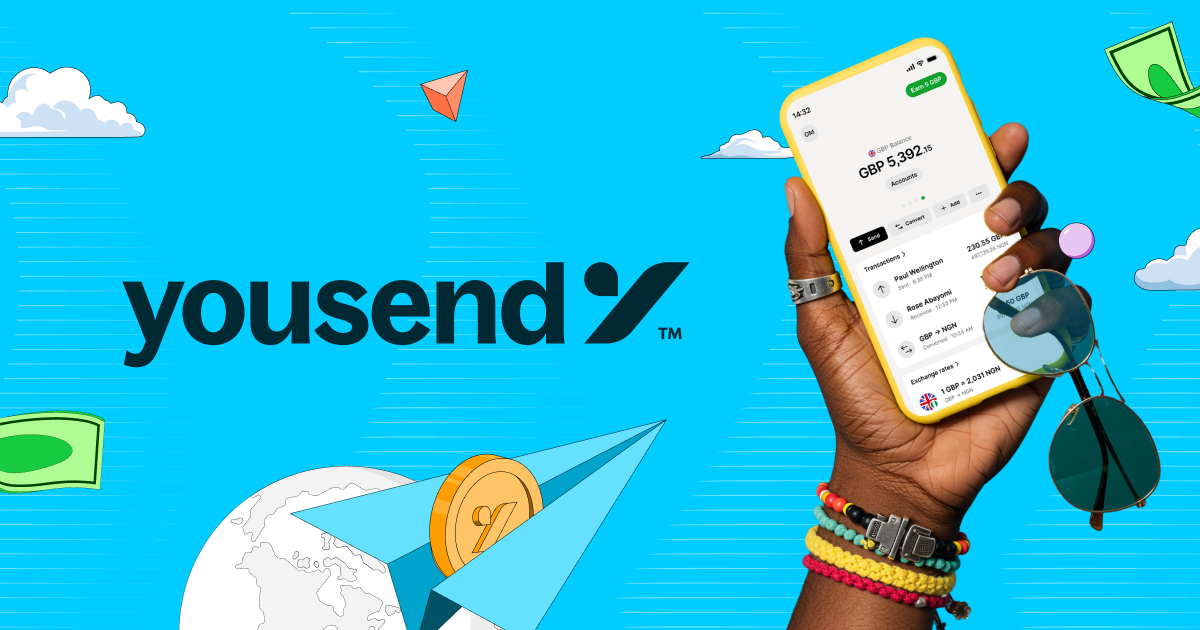
YouSend describes a digital remittance and multi-currency payments service for selected African corridors. Its public pages highlight USD, GBP and CAD accounts, sending from hubs such as the UK and Canada and receiving markets including Nigeria and Kenya. The catalogue and live account determine the exact route. The presence of a currency balance does not guarantee a wallet, cash or bank payout in every destination.
The product choice is therefore about scope. Wise suits someone managing many currencies or paying a bank abroad. YouSend may suit a diaspora sender who already holds an eligible balance and wants a focused bank payout. If the recipient needs cash pickup or an unsupported local rail, check a provider whose live menu explicitly offers it.
Access and verification
Wise offers web and mobile access. Identity checks can request a passport, national ID or accepted driving licence; additional checks usually take two to ten working days but can take longer. Bank-funded payments need the sender’s name and reference to match, while card funding requires a card in the customer’s name.
YouSend’s terms and help pages describe account registration, personal information and customer checks. Its app-led flow may require a funded balance or country-specific account setup before a transfer can be booked. The sender should verify the legal entity and regional terms for residence, because the service describes Canadian, UK and Nigerian regulatory relationships rather than one worldwide licence.
The access difference matters to a deadline. Wise’s mature account flow may provide more visible status and documentation. YouSend can be quick once an eligible account is ready, but a new customer should not assume that a public “minutes” claim means the account is verified or funded. Complete checks early and use legal names consistently across profile, funding and beneficiary.
Funding and payout methods
Wise says bank transfer is usually the cheapest funding route and documents Visa, Mastercard and some Maestro cards in eligible markets. Card, bank and SWIFT payments reach Wise on different schedules. The receiving bank details and currency must be correct before confirmation.
YouSend’s public product description is balance-led. The sender may need an available YouSend balance or the funding method presented for the customer’s market. The observed archive method is balance to bank; other methods should be confirmed in the current account rather than inferred from a general account page. A balance transfer, bank top-up and card-funded transfer are distinct price questions.
Wise’s bank payout and YouSend’s bank payout can be compared only when the exact beneficiary country, currency and funding semantics match. If YouSend’s balance is funded earlier, the apparent speed advantage may reflect when the money entered the account rather than the transfer processor’s delivery time. Record the pay-in, pay-out and whether the sender was already funded.
Fees, exchange rates and rewards
Wise shows a separate fee that varies with amount, currencies and payment method and says it uses the mid-market rate. The fee is still a cost, and a card-funded transfer can be more expensive than bank funding. Compare the amount the beneficiary receives after the complete quote.
YouSend’s homepage shows fee-free examples and a calculator, but its terms define transaction fees as platform charges that can change. A “FREE” example does not prove every corridor is fee-free. The customer exchange rate can also include the economic spread. Compare the exact amount delivered from the same balance or funding method, not a converter headline.
On a small transfer, a fixed fee can consume a large portion of the principal. On a larger transfer, a modest rate difference becomes more material. Wise’s fee may change with payment rail; YouSend’s quote can change with corridor, account type and payout. Test the intended amount instead of carrying a result from Canada-to-Nigeria to UK-to-Nigeria.
YouSend promotes YouPoints earned through referrals and international transactions and redeemed for future discounts or free transfers. Wise referral benefits likewise have conditions and may be credited separately. Capture the threshold, expiry and redemption step. A later reward is not money delivered to the recipient on the current standard send.
Speed and tracking
Wise’s tracker gives the most accurate estimate for the particular transfer. Its help centre says card payments are usually instant to Wise, bank funding can take one to four working days and SWIFT can take one to six working days to reach Wise. Additional checks and receiving-bank posting remain separate stages.
YouSend’s homepage advertises minutes and a very short average processing claim. That is a provider statement, not an independent delivery test. A balance-funded transfer may be ready for release sooner than a transfer that still needs a bank top-up. The recipient’s bank can also post after YouSend marks the payment sent.
Both services use account or transaction status. If a YouSend payment is pending, check whether the balance is sufficient, a bank payout is being reviewed or recipient details need attention. If Wise is pending, check the funding receipt, extra-check request and tracker estimate. Do not create a duplicate transaction while the original is being traced.
Coverage, currencies and limits
Wise says it operates in most countries subject to supported-currency, residence and product restrictions. YouSend’s current country page highlights Canada, Kenya, Nigeria, Cameroon, Côte d’Ivoire and Benin, while other official material describes a changing network involving the UK, Canada, Nigeria and Kenya. These pages should be treated as route guidance, not a universal promise.
Wise limits vary by currency, payment method and verification. YouSend account and transaction limits can depend on the sender market, balance, recipient country and local partner. A country balance is not automatically a permission to send any amount to every bank. Check the signed-in account and intended currency before promising a delivery date.
For a traveller or freelancer who needs several currency balances, Wise’s broader account features may be the better fit. For a diaspora sender moving money to a supported African bank from an eligible balance, YouSend may be simpler. For cash pickup, wallet delivery or a route outside YouSend’s visible network, use the service whose live destination menu actually supports that need.
Safety, cancellation and support
Wise says its UK entity safeguards funds separately and that balances are not bank deposits covered by FSCS. YouSend’s terms identify Yousend Inc in Canada and Yousend Payments Ltd in the UK, with regulatory and registration statements applying to relevant entities. Read the local terms rather than reducing the disclosure to a single global licence claim.
Use official apps and websites, protect credentials and verify the recipient bank independently. Balance-led services introduce an additional account step, so check that the recipient and payout currency are correct before moving funds from a balance. A regulated status does not guarantee recovery after a wrong bank number.
Wise says uncompleted transfers may be cancelled and completed transfers cannot be cancelled; card refunds usually take two to five working days and can take up to ten. YouSend’s cancellation and refund terms depend on transaction stage and funding method, so contact support before the bank payout is released. Keep the original receipt and account statement.
Wise routes help through the logged-in account and provides regional phone support. YouSend’s official contact material describes in-app chat and direct contact, with support messaging available. Include the reference, source amount, payout, funding proof and timestamp. A chat response is not confirmation that a reversal has settled.
Customer sentiment with an identity caveat
Wise has a current Trustpilot profile with customer reports praising transparent pricing, convenient balances and successful bank transfers, alongside complaints about verification, account restriction and support. YouSend did not have an attributable Trustpilot remittance profile in the checked search; similarly named Yousendit and Usend profiles are different businesses. Apple and Google app listings provide regional ratings and some written comments, but not a balanced review sample comparable to Wise’s profile.
This means YouSend sentiment should be described narrowly. A regional app-store rating is not a global score, and the absence of a Trustpilot profile is not evidence of poor service. It simply means customer-review evidence is thinner and must not be filled with similarly named entities. Price evidence and sentiment stay separate.
Which one fits?
Choose Wise when you need a mature multi-currency account, broad currency handling, web access, a conventional bank payout or an itemised rate-and-fee explanation. It is the more obvious first quote when the route is not within YouSend’s focused African network.
Choose YouSend when the live account shows your sender country, balance, currency and bank payout, and an app-led corridor is more useful than a broad currency catalogue. Check the legal entity, fee display and support path before sending a time-sensitive amount.
If both show the same bank destination, compare a funded balance with a funded balance or a like-for-like top-up method. Enter the same amount and currency, record the timestamp, then compare recipient amount and delivery estimate. If one provider alone supports the recipient’s route, explain that as service fit rather than a rate victory.
BestSendRate archive and exact-key evidence
The public catalogue lists 85,879 canonical Wise observations from 20 July to 3 September 2026 and 1,013 canonical YouSend observations from 21 July to 3 September 2026. They are stored quote observations, not completed transfers, users, bank receipts or payout confirmations.
Only two exact standard pairings survived the strict Wise–YouSend key match. The two rows split one win each between Wise and YouSend, with no tie. The sample is too small for a meaningful headline percentage and is not a universal price conclusion. Pairing required equal date, route, amount, mode, pay-in and pay-out, positive recipient amounts, known methods, high or medium confidence and non-legacy collection.
Promotional pricing was excluded. To reproduce the check, query both public archives by route and amount, retain the exact date | route | amount | mode | payIn | payOut key, select the strongest eligible row per provider and compare recipient amounts. Preserve the balance-to-bank semantics; do not substitute a card, wallet or cash row. A future catalogue refresh should rerun the calculation rather than carry forward this two-row split.
A cautious decision routine
For Wise, begin with the beneficiary bank and decide whether the transfer should be funded from a balance, a bank payment or an eligible card. For YouSend, begin with the sender country and confirm that the account can hold the required currency and fund the bank payout. This order matters because a public destination article can describe a corridor that a newly registered customer cannot yet use.
Record the source amount, destination currency, displayed fee, customer rate, recipient amount and delivery estimate before authorisation. If the sender is moving money from a pre-funded balance, write down when that balance became available; otherwise an apparent transfer-speed comparison confuses funding time with payout time. For recurring support, run the standard quote again each month and treat YouPoints or a Wise referral as a separate optional benefit.
The recipient should confirm the bank name, account number and currency independently. If a transfer becomes pending, check whether the account needs identity evidence, the balance is insufficient or the receiving bank has not posted the credit. Keep the reference and any support conversation until the recipient confirms the funds. A small evidence trail is particularly important where public review material is limited and the live account is the main source of operational detail.
For a larger payment, ask both services about account and payment limits before moving the principal. YouSend’s balance model can require an earlier top-up, while Wise may request a further check as the amount rises. A quote that looks available in a public calculator is not an approval to send a high-value order.
For a deadline payment, verify the account is fully active before transferring money into it. A balance that is visible but not cleared may not be available for immediate payout. Wise can show a transfer as awaiting funds, while YouSend may need a balance top-up or account review. Treat those statuses as process stages, not promises that the beneficiary has been paid.
Where this comparison comes from
Provider facts are checked against the linked first-party material. Historical price findings use matched BestSendRate observations; confirm the current quote before sending.
Wise vs YouSend: established multi-currency account or focused African corridors? FAQs
Is Wise cheaper than YouSend?
The archive had only two exact standard pairings, split one each. That is not enough to name a universal winner; check the live quote.
What is YouSend best for?
It is a focused app-led option for eligible African corridors and balance-to-bank transfers shown in the current account.
Is Wise a bank?
Wise is an e-money and multi-currency service, not a conventional bank. Its UK balance is safeguarded under its stated terms.
Does YouSend have bank payouts?
Bank payout is the observed archive method. Confirm the exact beneficiary route in the current app.
Can either service pay cash pickup?
Do not assume so. Check the live payout menu; YouSend’s observed comparison is balance to bank and Wise is primarily bank-led.
Can Wise hold currencies?
Yes, in eligible markets. Holding a currency does not guarantee every payout route.
What currencies does YouSend support?
Its official pages highlight USD, GBP and CAD accounts and selected African currencies. The current account controls eligibility.
Does Wise use the mid-market rate?
Wise says it displays and uses the mid-market rate with a separate fee.
Is YouSend fee-free?
Some homepage examples show “FREE,” but transaction fees and rate economics are route-specific and can change.
Are YouPoints an instant discount?
They are conditional rewards that can be redeemed for later discounts or free transfers; read the active terms.
Can I fund Wise by card?
Eligible Visa, Mastercard and some Maestro cards are supported in relevant markets.
Can I fund YouSend by card?
Do not assume card funding. The account and route must show the available funding method.
How fast is YouSend?
Its site advertises minutes, but actual timing depends on account funding, checks, bank processing and route.
How fast is Wise?
Wise provides a route-specific tracker estimate; bank funding and checks can add working days.
Can I cancel a YouSend transfer?
Ask support immediately. Whether a reversal is possible depends on payout and funding status.
Can I cancel Wise?
An uncompleted transfer may be cancellable; a completed payout cannot be cancelled.
Does YouSend have a Trustpilot score?
No attributable Trustpilot remittance profile was found in the checked search. Do not substitute similarly named services.
Are app-store ratings a global score?
No. They are regional, self-selected and not directly comparable with a controlled price study.
Why is the archive comparison only two rows?
Only two records matched every date, route, amount, mode, funding and payout key after quality filters.
What should I record before paying?
Save amount, funding source, payout, fee, rate, recipient amount, estimate, reward terms and reference.